
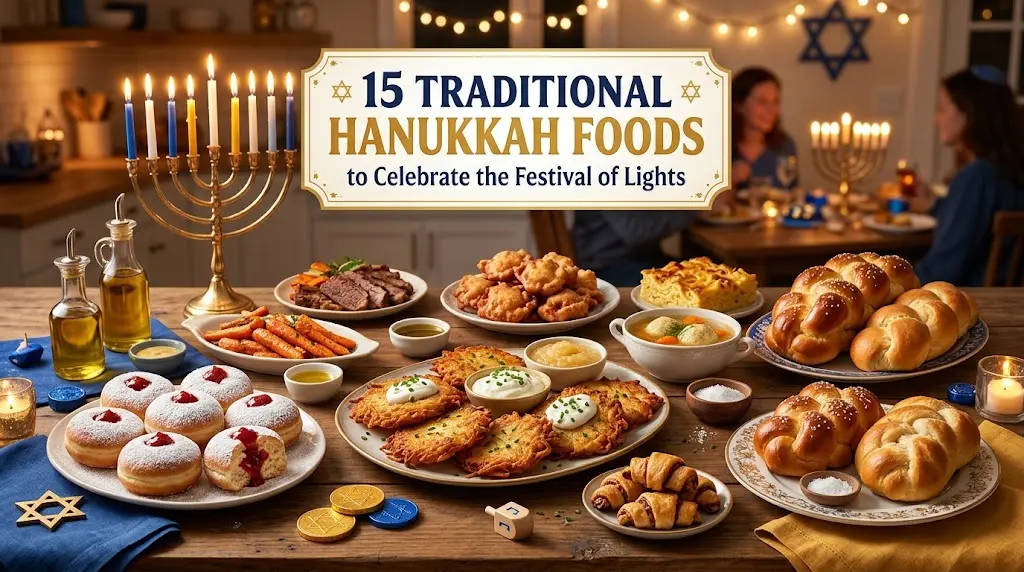
15 Traditional Hanukkah Foods to Celebrate the Festival of Lights
Hanukkah is a joyful winter celebration filled with family gatherings, glowing menorah candles, festive meals, and recipes passed down through generations. Traditional Hanukkah foods reflect the holiday’s rich cultural heritage, with many dishes connected to the symbolism of oil, while others come from the diverse culinary traditions of Jewish communities around the world.
Crispy potato latkes, sweet jelly-filled sufganiyot, tender brisket, and comforting noodle kugel are just a few dishes that can make a Hanukkah table feel special. Some recipes are fried in oil to commemorate the holiday’s traditional story, while others provide hearty main courses, flavorful sides, and sweet treats to share with loved ones.
Whether you’re planning a traditional family dinner, hosting a festive gathering, or exploring Hanukkah cuisine for the first time, these 15 traditional Hanukkah foods offer a delicious starting point. Each recipe includes ingredients, straightforward cooking instructions, helpful tips, and an original high-quality image prompt designed for your website.
1. Classic Crispy Potato Latkes
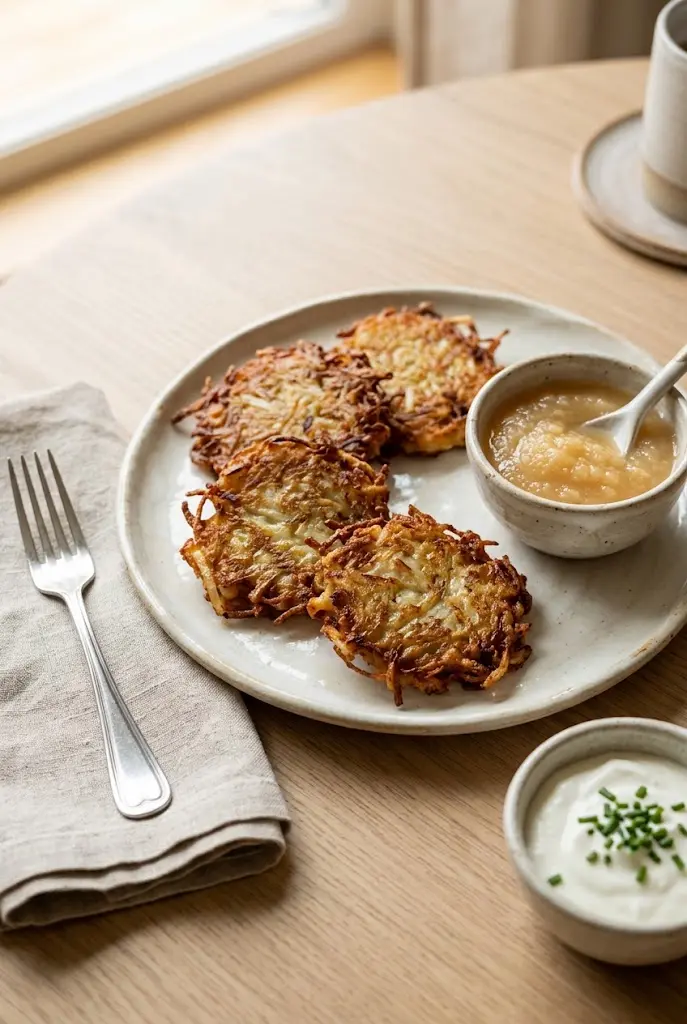
Potato latkes are among the best-known Hanukkah foods. These savory pancakes combine grated potatoes, onion, eggs, and flour into crisp, golden rounds with tender centers. Their delicious fried exterior makes them a natural centerpiece for a festive holiday meal.
Serve latkes hot with applesauce, sour cream, or chopped fresh chives. For the best texture, remove as much moisture as possible from the grated potatoes before frying, and cook in small batches so the oil temperature stays steady.
Ingredients
- 2 lb russet potatoes, peeled
- 1 medium yellow onion
- 2 large eggs
- 3 tbsp all-purpose flour
- 1 tsp salt
- ¼ tsp black pepper
- ¾ cup neutral cooking oil, approximately, for frying
- ½ cup applesauce, for serving
- ½ cup sour cream, for serving, optional
- 1 tbsp chopped chives, optional
How to Make
- Coarsely grate the potatoes and onion using a box grater or food processor.
- Transfer the mixture to a clean kitchen towel and squeeze firmly over the sink to remove excess liquid.
- Place the drained mixture in a bowl. Add the eggs, flour, salt, and pepper, then mix until combined.
- Heat about ¼ inch of oil in a heavy skillet over medium-high heat. The oil should shimmer but not smoke.
- Spoon approximately 2 tablespoons of mixture into the pan for each latke. Flatten gently and fry for about 3–4 minutes per side, until deeply golden and cooked through.
- Transfer to a wire rack or paper-towel-lined plate. Repeat with the remaining mixture, adjusting the heat as needed.
- Serve immediately with applesauce, sour cream, or chives.
Tips
- Squeezing out excess moisture is the key to crisp edges.
- Avoid crowding the skillet, which can lower the oil temperature.
- Keep finished latkes on a wire rack in a 200°F (95°C) oven while preparing the remaining batches.
2. Jelly-Filled Sufganiyot
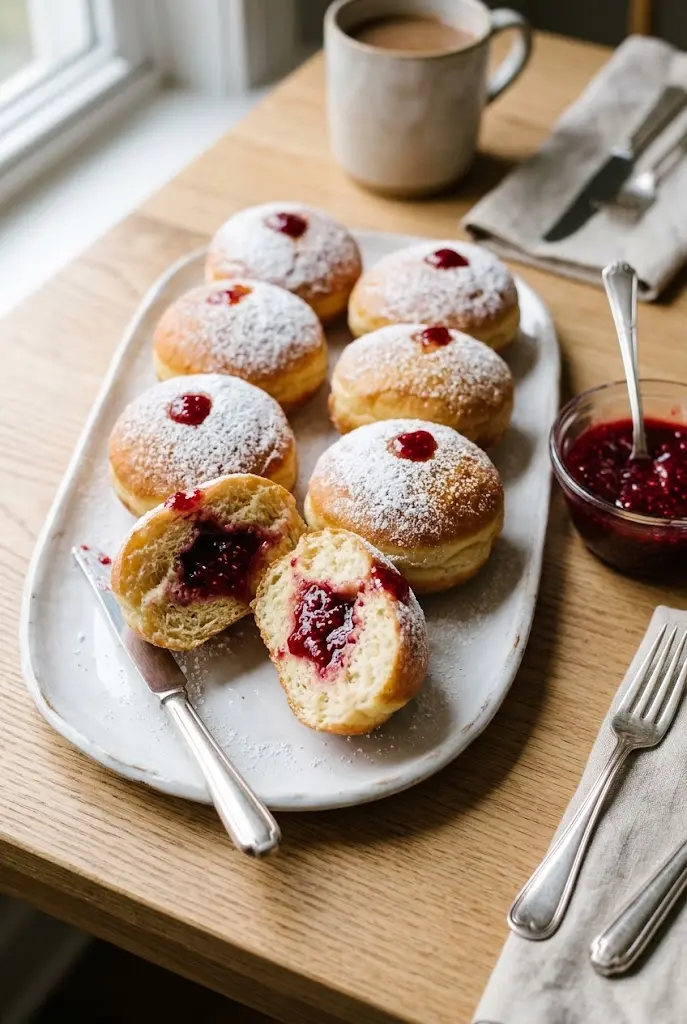
Sufganiyot are soft, round doughnuts traditionally filled with fruit jelly or jam and finished with a dusting of powdered sugar. They are especially popular during Hanukkah, when fried foods recall the holiday’s association with oil. Their pillowy interiors and sweet centers make them a festive dessert for sharing.
Although strawberry and raspberry fillings are familiar choices, you can also use apricot preserves or another thick fruit jam. Allow the dough to rise properly before frying so the finished doughnuts are light rather than dense.
Ingredients
For the dough
- 3 cups all-purpose flour, plus extra for dusting
- 2¼ tsp instant yeast
- ¼ cup granulated sugar
- ½ tsp salt
- ¾ cup warm milk, about 105–110°F
- 2 large eggs, room temperature
- 4 tbsp unsalted butter, softened
- 1 tsp vanilla extract
For frying and filling
- 4–6 cups neutral cooking oil, as needed for a deep pot
- ¾ cup thick strawberry or raspberry jam
- ½ cup powdered sugar
How to Make
- Mix the flour, yeast, sugar, and salt in a large bowl. Add the warm milk, eggs, softened butter, and vanilla. Knead for 8–10 minutes until smooth and elastic.
- Cover and let rise in a warm place for about 60–90 minutes, or until doubled in size.
- Roll the dough to approximately ½ inch thick. Cut into 2½-inch rounds and place on lightly floured parchment. Cover and let rise for another 30–45 minutes.
- Heat the oil in a heavy pot to 340–350°F (171–177°C), checking with a thermometer. Fry a few doughnuts at a time for about 1½–2 minutes per side, adjusting as needed until evenly golden and cooked through.
- Transfer to a wire rack and allow to cool until safe to handle.
- Spoon the jam into a piping bag fitted with a small round tip. Make a small opening in the side of each doughnut and pipe in the filling.
- Dust generously with powdered sugar and serve fresh.
Tips
- Keep the oil temperature steady; oil that is too hot can brown the outside before the centers cook.
- Use thick preserves to reduce leakage.
- Check one test doughnut before frying the full batch to confirm the timing and temperature.
3. Slow-Cooked Hanukkah Beef Brisket
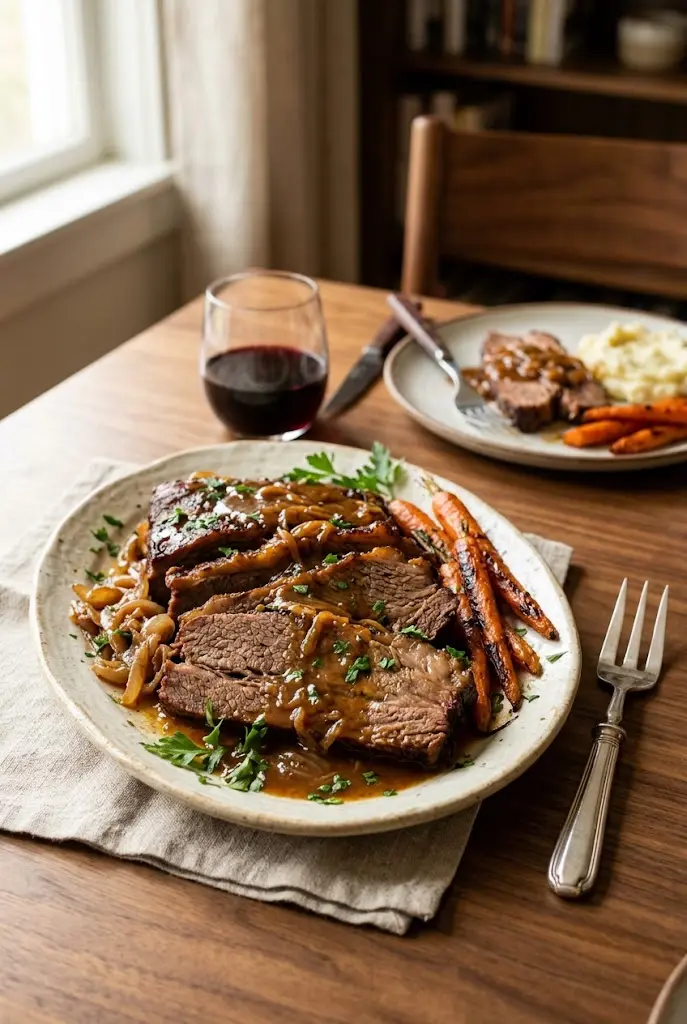
Slow-cooked beef brisket is a familiar centerpiece at many Ashkenazi Jewish holiday dinners, including Hanukkah gatherings. The beef cooks gently with onions, garlic, broth, and herbs until it becomes tender enough to slice or pull apart. Its savory cooking juices also create a rich sauce that pairs beautifully with potatoes and vegetables.
Brisket is especially useful for a larger family meal because it can be prepared ahead. Allowing the meat to rest before slicing helps preserve its juices, while cutting across the grain makes each serving easier to eat.
Ingredients
- 3–4 lb beef brisket
- 2 tbsp olive oil
- 2 large yellow onions, sliced
- 4 garlic cloves, minced
- 2 cups beef broth
- 2 tbsp tomato paste
- 2 tbsp apple cider vinegar
- 1 tbsp Worcestershire sauce, check ingredients
- 1 tsp dried thyme
- 1 tsp paprika
- 1 tsp salt, or to taste
- ½ tsp black pepper
- 3 large carrots, cut into chunks
- 2 bay leaves
How to Make
- Preheat the oven to 325°F (163°C). Pat the brisket dry and season it with salt, pepper, paprika, and thyme.
- Heat the olive oil in a large oven-safe Dutch oven over medium-high heat. Brown the brisket on both sides, about 4–5 minutes per side, then transfer to a plate.
- Add the sliced onions and cook for 5–7 minutes until softened. Stir in the garlic and tomato paste and cook for another minute.
- Add the broth, apple cider vinegar, Worcestershire sauce, and bay leaves, scraping up the browned bits from the bottom.
- Return the brisket to the pot and add the carrots. Cover tightly and braise for approximately 3–4 hours, checking periodically, until the meat is fork-tender.
- Transfer the brisket to a cutting board and rest for 15–20 minutes. Slice across the grain.
- Skim excess fat from the sauce, remove the bay leaves, and serve the brisket with onions, carrots, and gravy.
Tips
- For easier slicing, cook the brisket a day ahead, refrigerate it in its cooking liquid, and slice it cold before reheating gently.
- The cooking time varies with the thickness and cut of the brisket; tenderness is a more useful guide than the clock.
- Slice across the grain for a more tender bite.
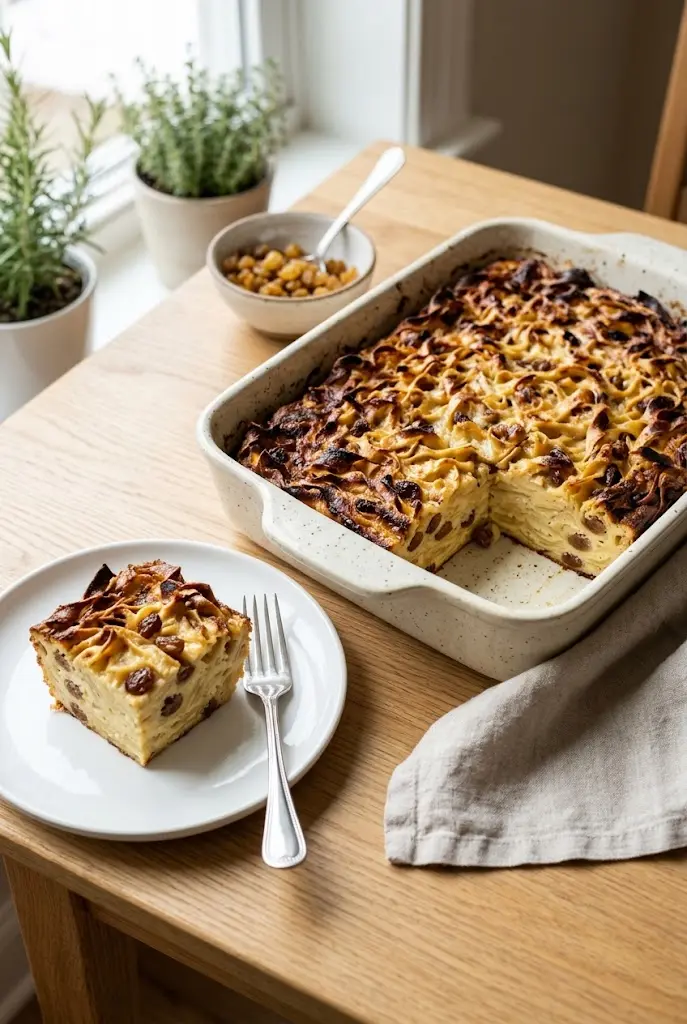
4. Sweet Noodle Kugel
Sweet noodle kugel is a baked noodle pudding that appears on many Jewish holiday tables. Egg noodles are combined with a creamy mixture of eggs, dairy, sugar, and warm spices, then baked until the center sets and the top turns lightly golden. Some versions include raisins, while others feature a simple custard-like filling.
For Hanukkah, kugel makes a comforting side dish or a sweet addition to a holiday buffet. It can be served warm or at room temperature, making it practical when several dishes need to be prepared for the same meal.
Ingredients
- 12 oz wide egg noodles
- 4 large eggs
- 1 cup sour cream
- 1 cup cottage cheese
- ½ cup whole milk
- ½ cup granulated sugar
- 4 tbsp unsalted butter, melted
- 1 tsp vanilla extract
- 1 tsp ground cinnamon
- ½ tsp salt
- ½ cup raisins, optional
How to Make
- Preheat the oven to 350°F (177°C). Grease a 9 × 13-inch baking dish with butter.
- Cook the egg noodles in salted water according to the package directions until just tender. Drain well.
- In a large bowl, whisk the eggs, sour cream, cottage cheese, milk, sugar, melted butter, vanilla, cinnamon, and salt.
- Fold in the cooked noodles and raisins, if using, until evenly coated.
- Transfer the mixture to the prepared baking dish and spread it into an even layer.
- Bake for 45–55 minutes, until the center is set and the top is lightly golden. If the top browns too quickly, loosely cover it with foil.
- Rest for 10–15 minutes before cutting into squares and serving.
Tips
- Drain the noodles thoroughly so excess water does not dilute the custard.
- For a more pronounced cinnamon flavor, add a light sprinkle over the top before baking.
- Refrigerate leftovers promptly in a covered container and reheat portions until steaming hot.
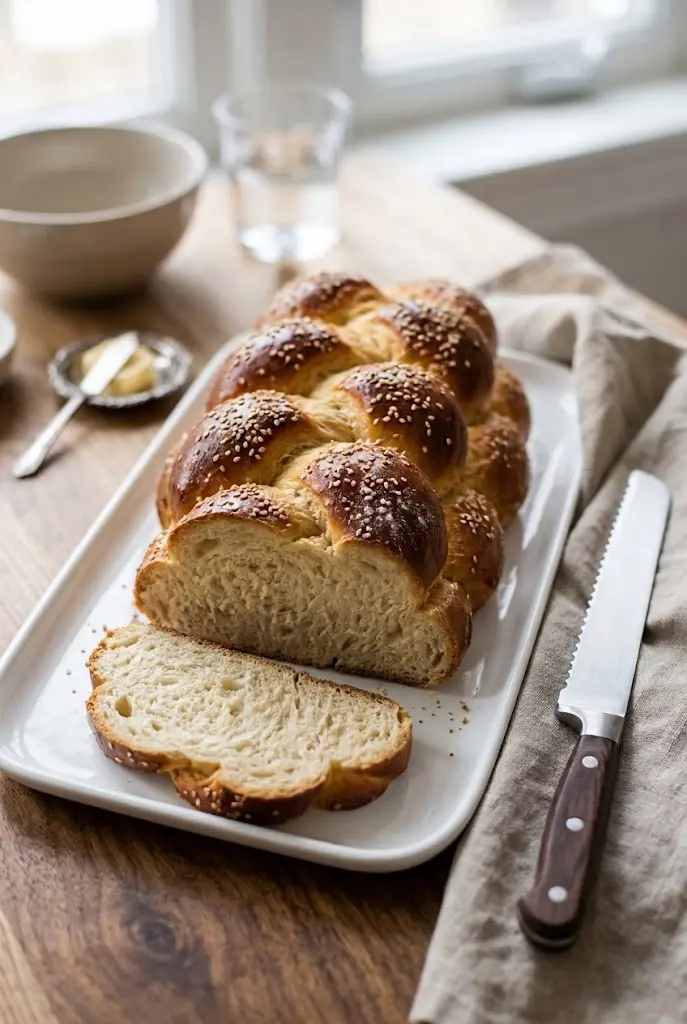
5. Traditional Braided Challah Bread
Challah is a beautifully braided bread associated with Jewish Sabbath and holiday meals. Its soft interior, golden crust, and delicate sweetness make it a welcome addition to a Hanukkah dinner table. Although challah is not exclusive to Hanukkah, it complements the holiday’s other traditional dishes and helps round out a shared meal.
A homemade loaf can be served in thick slices alongside brisket, soup, or roasted vegetables. The dough is enriched with eggs and oil, giving the bread a tender crumb, while an egg wash creates its characteristic glossy finish.
Ingredients
- 4 cups all-purpose flour, plus extra as needed
- 2¼ tsp instant yeast
- ¼ cup granulated sugar
- 1 tsp salt
- 2 large eggs
- 1 large egg yolk
- ¾ cup warm water, about 105–110°F
- ¼ cup neutral oil
- 1 egg, beaten, for the egg wash
- 1 tbsp sesame seeds, optional
How to Make
- Combine the flour, yeast, sugar, and salt in a large bowl.
- Add the eggs, egg yolk, warm water, and oil. Mix until a dough forms, then knead for 8–10 minutes until smooth and elastic. Add a little flour if the dough is excessively sticky.
- Place the dough in a lightly oiled bowl, cover, and let rise for about 1–1½ hours, or until doubled in size.
- Divide the dough into six equal pieces. Roll each piece into a rope of similar length and braid them together, pinching the ends securely.
- Place the loaf on a parchment-lined baking sheet, cover loosely, and let rise for 30–45 minutes.
- Preheat the oven to 350°F (177°C). Brush the loaf with beaten egg and sprinkle with sesame seeds if desired.
- Bake for approximately 30–35 minutes, until deeply golden and cooked through. Cool on a wire rack before slicing.
Tips
- Weighing the dough portions helps produce an even braid.
- If the loaf browns too quickly, tent it loosely with foil for the remainder of baking.
- Allow the challah to cool before slicing so the soft interior does not compress.
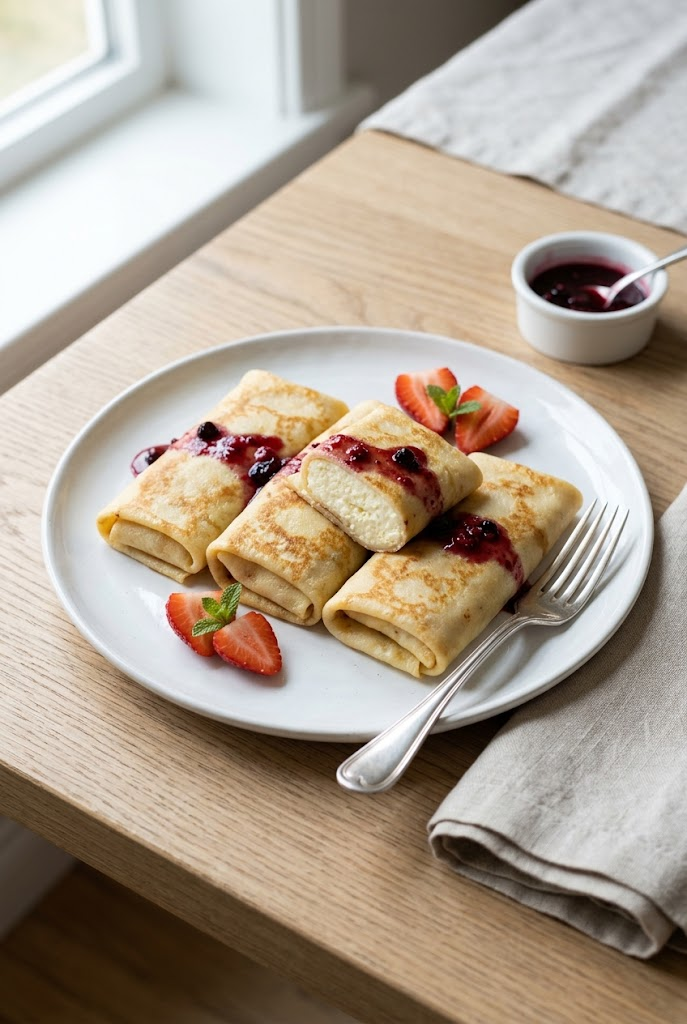
6. Cheese Blintzes
Cheese blintzes are thin pancakes filled with a sweet, creamy cheese mixture, folded into neat parcels, and lightly fried until golden. They are especially associated with Ashkenazi Jewish cooking and fit naturally into the tradition of serving dairy dishes during Hanukkah.
Serve them warm for breakfast, brunch, or as part of a holiday spread. A spoonful of berry sauce, fresh strawberries, or a little sour cream adds freshness without overwhelming the delicate cheese filling.
Ingredients
For the pancakes
- 1 cup all-purpose flour
- 2 large eggs
- 1 cup milk
- ¼ cup water
- 1 tbsp melted butter
- ¼ tsp salt
For the filling
- 1 cup farmer cheese or well-drained ricotta
- 4 oz cream cheese, softened
- 2 tbsp granulated sugar
- 1 egg yolk
- ½ tsp vanilla extract
- 1 tbsp butter, for frying
For serving
– ½ cup berry sauce or fresh berries, optional
How to Make
- Whisk the flour, eggs, milk, water, melted butter, and salt until the batter is smooth. Let it rest for 15 minutes.
- Lightly butter a nonstick skillet and heat over medium heat. Pour in a small amount of batter, swirling to make a thin pancake.
- Cook for about 45–60 seconds, until the surface is set. Flip briefly if needed, then transfer to a plate. Repeat with the remaining batter.
- Mix the farmer cheese, cream cheese, sugar, egg yolk, and vanilla until smooth.
- Place a spoonful of filling near the lower edge of each pancake. Fold in the sides and roll into a neat parcel.
- Melt the remaining butter in a skillet over medium-low heat. Place the blintzes seam-side down and cook for 2–3 minutes per side until golden and the filling is heated through.
- Serve warm with berry sauce or fresh fruit.
Tips
- Drain ricotta thoroughly if using it instead of farmer cheese.
- Make the pancakes ahead and refrigerate them between sheets of parchment.
- Cook the filled blintzes over moderate heat so the outside browns without burning.
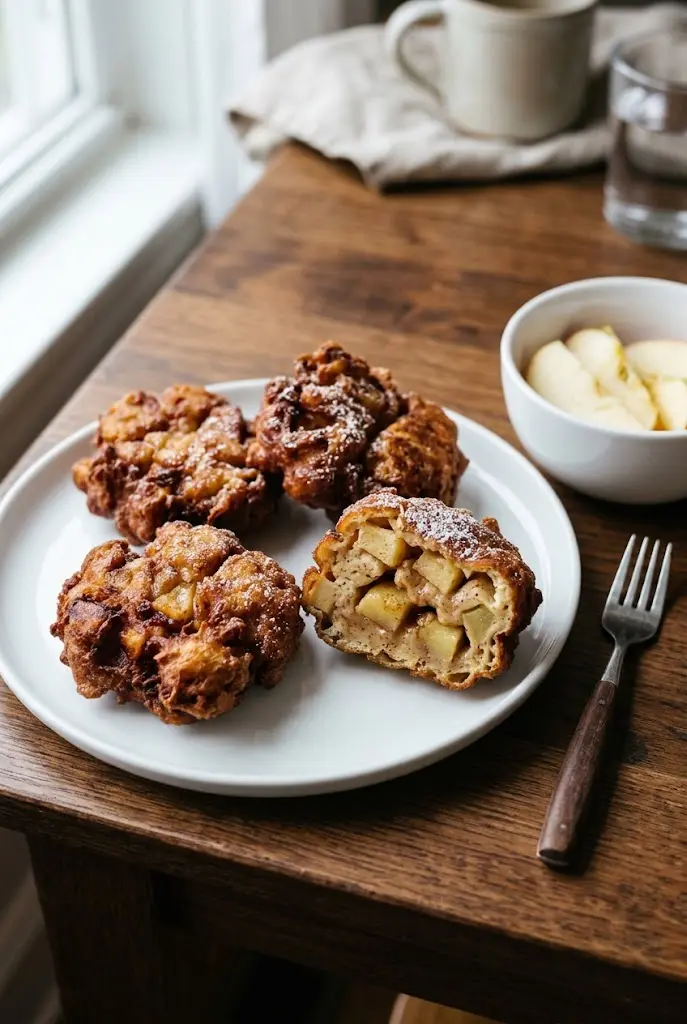
7. Golden Apple Fritters
Apple fritters are a familiar sweet treat in several Jewish holiday food traditions. Chunks of apple are folded into a lightly spiced batter, then fried until crisp outside and tender inside. Their warm cinnamon aroma makes them particularly inviting during Hanukkah’s winter celebrations.
These fritters are best served soon after frying, when the exterior is crisp and the apples remain soft. A light dusting of powdered sugar is enough to finish them, although a simple cinnamon-sugar coating is another appealing option.
Ingredients
- 2 medium apples, peeled and diced
- 1 cup all-purpose flour
- 2 tbsp granulated sugar
- 1 tsp baking powder
- ½ tsp ground cinnamon
- ¼ tsp salt
- 1 large egg
- ½ cup milk
- 1 tsp vanilla extract
- 3–4 cups neutral cooking oil, as needed for frying
- ¼ cup powdered sugar, for serving
How to Make
- Whisk the flour, granulated sugar, baking powder, cinnamon, and salt in a bowl.
- In a separate bowl, beat the egg with the milk and vanilla.
- Stir the wet mixture into the dry ingredients until just combined, then fold in the diced apples.
- Heat 2–3 inches of oil in a heavy pot to 350°F (177°C), using a thermometer to monitor the temperature.
- Carefully drop spoonfuls of batter into the oil, leaving space between fritters. Fry in small batches for approximately 3–4 minutes, turning as needed until golden and cooked through.
- Transfer to a wire rack to drain. Check that a test fritter is cooked in the center before frying the rest.
- Dust lightly with powdered sugar and serve warm.
Tips
- Use firm apples that hold their shape during cooking.
- Cut the apple pieces relatively small so they soften before the batter becomes too dark.
- Allow the oil to return to temperature between batches for more even browning.
8. Sephardic Bimuelos
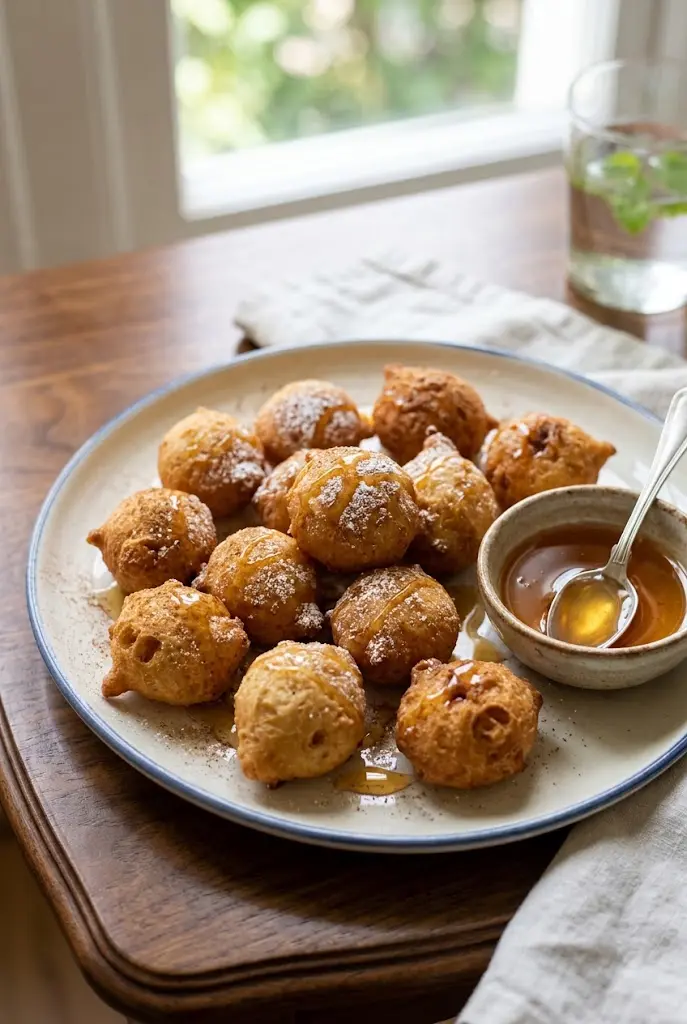
Bimuelos are fried dough fritters enjoyed in several Sephardic Jewish communities during Hanukkah. Depending on family and regional traditions, they may be made from yeast dough or a simpler batter, then finished with honey or syrup. Their crisp edges and soft centers make them a delicious alternative to filled doughnuts.
For a home-friendly version, this recipe uses a yeast dough that produces light, irregular fritters. Serve them warm with a modest drizzle of honey syrup, making them easy to share on a dessert platter.
Ingredients
For the dough
- 2 cups all-purpose flour
- 1½ tsp instant yeast
- 1 tbsp granulated sugar
- ½ tsp salt
- ¾ cup warm water, about 105–110°F
- 1 tbsp olive oil
For frying and serving
- 4–6 cups neutral cooking oil, as needed for a deep pot
- ⅓ cup honey
- 2 tbsp water
- 1 tsp lemon juice
- ½ tsp ground cinnamon, optional
How to Make
- Combine the flour, yeast, sugar, and salt in a bowl. Add the warm water and olive oil, then mix and knead for about 5 minutes until a soft dough forms.
- Cover and let rise for 45–60 minutes, until visibly puffy.
- In a small saucepan, warm the honey, water, and lemon juice over low heat until pourable. Remove from the heat and set aside.
- Heat the frying oil in a heavy pot to 350°F (177°C).
- With lightly oiled hands or two spoons, form small portions of dough and carefully lower them into the oil. Fry in batches for approximately 3–4 minutes, turning until golden and cooked through.
- Transfer to a wire rack to drain briefly.
- Drizzle the warm fritters with honey syrup and sprinkle with cinnamon if desired. Serve while fresh.
Tips
- Keep the dough portions small enough to cook through evenly.
- Avoid adding too much extra flour; a slightly soft dough helps create a tender interior.
- Drizzle the syrup just before serving if you want to preserve more of the fritters’ crispness.
9. Oven-Roasted Chicken with Garlic and Herbs
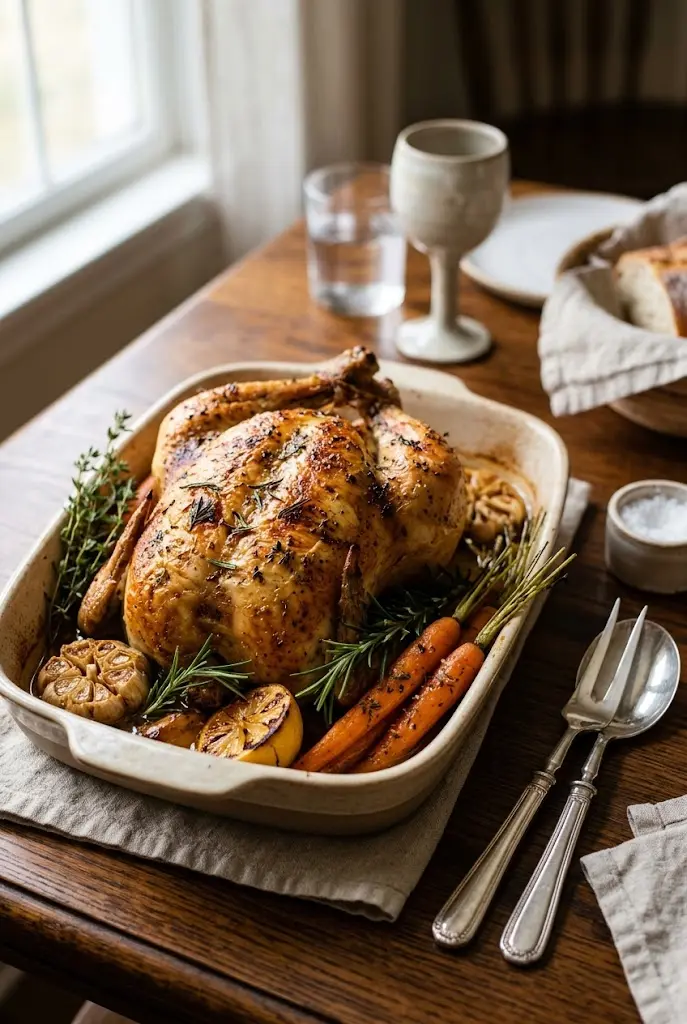
Roasted chicken is a practical centerpiece for a Hanukkah dinner, particularly when a family wants a hearty meal alongside traditional fried foods and comforting sides. Garlic, lemon, and herbs create a savory flavor while the oven helps develop golden skin and juicy meat.
This recipe works well for a smaller family gathering and can be served with roasted carrots, potatoes, or seasonal vegetables. Resting the chicken before carving helps the juices redistribute and makes serving easier.
Ingredients
- 1 whole chicken, about 4–5 lb
- 2 tbsp olive oil
- 1 lemon, halved
- 5 garlic cloves, lightly crushed
- 1 tbsp chopped fresh rosemary
- 1 tbsp chopped fresh thyme
- 1½ tsp salt
- ½ tsp black pepper
- 1 lb carrots, cut into chunks
- 1 medium onion, cut into wedges
- ½ cup chicken broth
How to Make
- Preheat the oven to 425°F (220°C). Remove any giblets from the chicken cavity, pat the chicken dry, and place it in a roasting pan.
- Rub the chicken with olive oil, salt, pepper, rosemary, and thyme. Place the lemon halves and two crushed garlic cloves inside the cavity.
- Arrange the carrots, onion, and remaining garlic around the chicken. Pour the broth into the pan.
- Roast for 15 minutes at 425°F, then reduce the oven temperature to 375°F (190°C).
- Continue roasting until the thickest part of the breast and the innermost part of the thigh reach at least 165°F (74°C), avoiding contact between the thermometer and bone. Cooking time varies by size.
- If the skin browns too quickly, loosely tent the chicken with foil. Add a little broth if the pan becomes dry.
- Rest for 15–20 minutes before carving. Serve with the roasted vegetables and pan juices.
Tips
- Drying the skin thoroughly before roasting encourages better browning.
- Use a food thermometer rather than relying on color or time alone.
- Rest the chicken before carving to help retain moisture.
10. Traditional Cheese Latkes
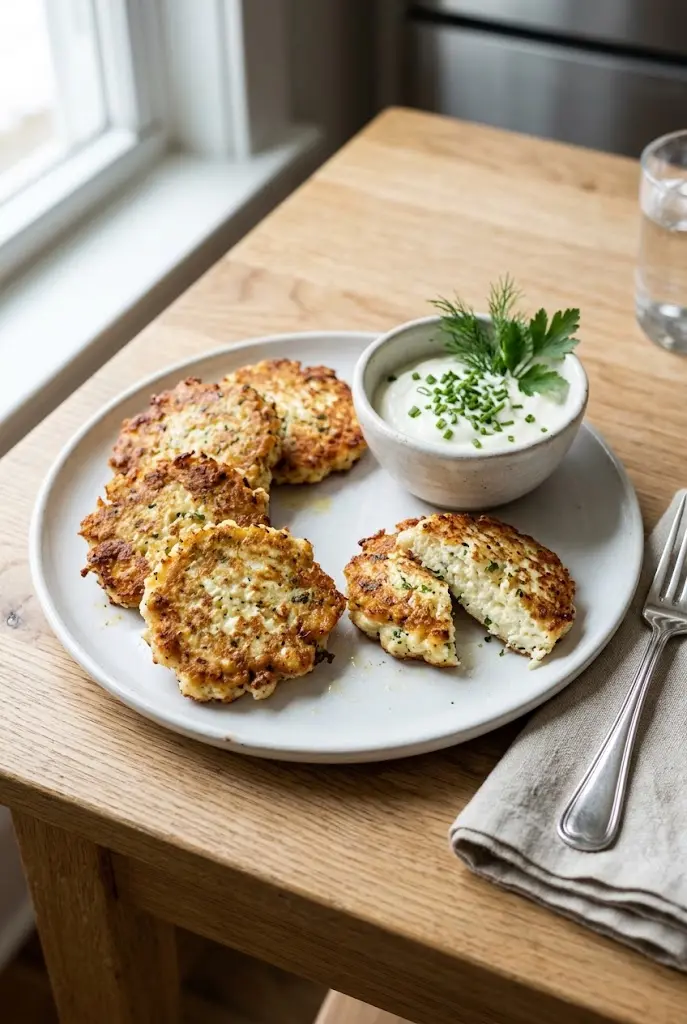
Cheese latkes offer a different take on the familiar potato pancake. Made with a soft cheese mixture, eggs, and a little flour, they develop delicate golden edges and a tender center. Dairy-based dishes have a place in some Hanukkah food traditions, although specific recipes vary between families and communities.
These small pancakes are suitable for a holiday brunch, a light starter, or a shared platter alongside fruit and fresh herbs. Their mild flavor pairs especially well with sour cream or a spoonful of fruit preserves.
Ingredients
- 1 cup farmer cheese or well-drained ricotta
- 2 large eggs
- ¼ cup all-purpose flour
- 1 tbsp granulated sugar
- ¼ tsp salt
- ½ tsp vanilla extract, optional for a slightly sweet version
- 2 tbsp neutral oil, for frying
- ½ cup sour cream, for serving
- 1 tbsp chopped chives, optional
How to Make
- Place the farmer cheese in a bowl and mash lightly with a fork. If using ricotta, make sure it is well drained.
- Add the eggs, flour, sugar, salt, and vanilla if using. Mix until a thick, spoonable batter forms.
- Heat a thin layer of oil in a nonstick skillet over medium-low heat.
- Spoon about 2 tablespoons of batter into the pan for each pancake. Flatten slightly, leaving space between each one.
- Cook for about 2–3 minutes per side, until golden and set in the middle. Lower the heat if the outsides brown before the centers cook.
- Transfer to a plate lined with paper towels or a wire rack and repeat with the remaining batter.
- Serve warm with sour cream and chives, or use fruit preserves for a sweeter presentation.
Tips
- If the mixture seems too loose, add flour one teaspoon at a time.
- Keep the pancakes small so they are easier to flip without breaking.
- Use medium-low heat to give the centers enough time to set.
11. Potato Kugel
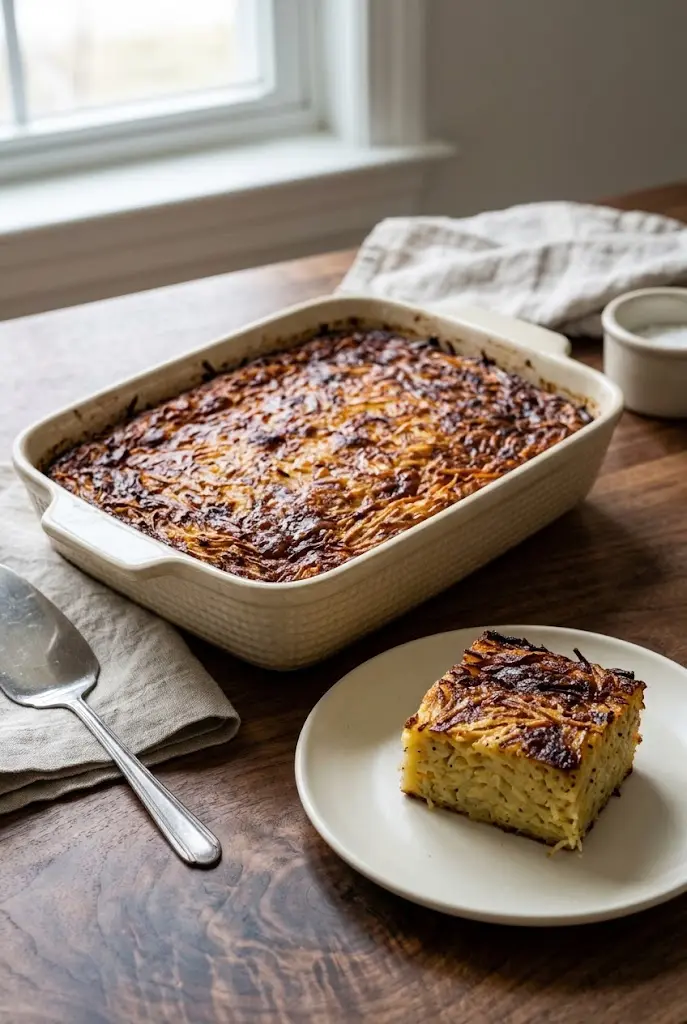
Potato kugel is a savory baked casserole made from grated potatoes, onion, eggs, and seasonings. It develops a crisp, browned top with a tender interior, making it a comforting accompaniment to a holiday dinner. Unlike sweet noodle kugel, this version emphasizes the natural flavor of potatoes and onions.
It is a useful choice for a larger gathering because the ingredients are simple and the casserole can be baked in one dish. Serve it in squares alongside roasted chicken, brisket, or a fresh vegetable salad.
Ingredients
- 3 lb russet potatoes, peeled
- 1 large yellow onion
- 4 large eggs
- ¼ cup all-purpose flour
- ¼ cup olive oil, divided
- 1½ tsp salt
- ½ tsp black pepper
- 1 tsp baking powder
How to Make
- Preheat the oven to 400°F (204°C). Grease a 9 × 13-inch baking dish with 2 tablespoons of olive oil.
- Coarsely grate the potatoes and onion. Transfer them to a clean kitchen towel and squeeze out as much excess liquid as possible.
- In a large bowl, whisk the eggs, flour, salt, pepper, and baking powder.
- Fold the grated potato and onion into the egg mixture until evenly combined.
- Carefully pour the remaining 2 tablespoons of oil into the prepared dish and spread it across the base. Add the potato mixture and level the surface.
- Bake for approximately 60–75 minutes, until the top is deep golden and the center is fully cooked. Cover loosely with foil if the top browns too quickly.
- Rest for 10–15 minutes before cutting into squares and serving.
Tips
- Squeeze the grated potatoes well to help the casserole brown rather than steam.
- A metal baking pan can produce especially crisp edges; check the kugel earlier if using one.
- Let the casserole rest before slicing to help each portion hold its shape.
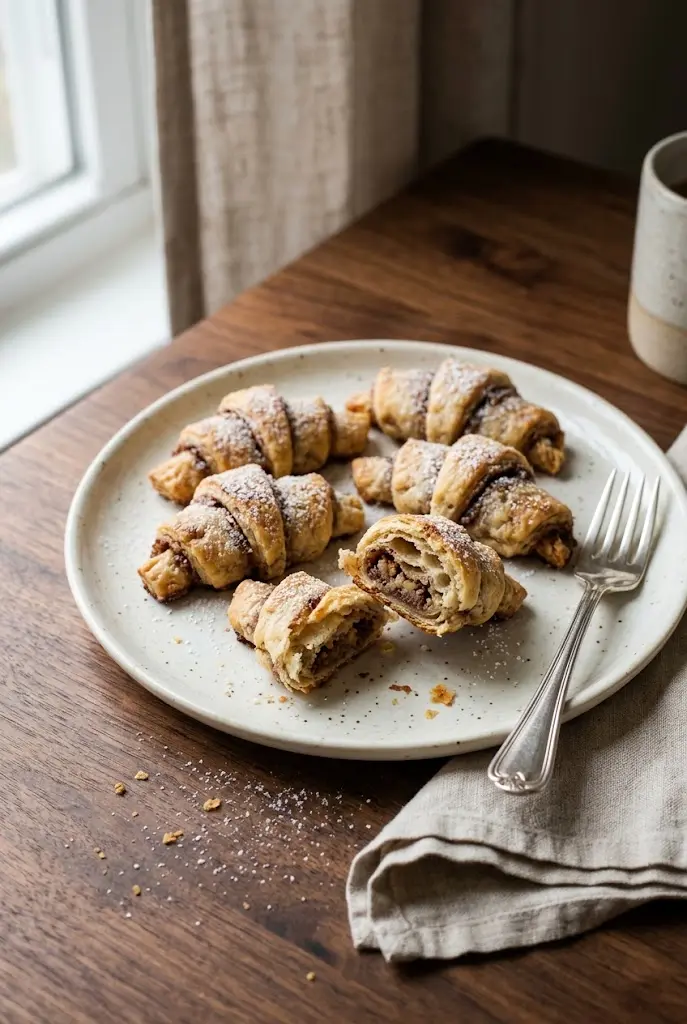
12. Rugelach with Cinnamon and Chocolate
Rugelach are small rolled pastries associated with Jewish baking traditions. They are often made with a tender cream-cheese dough and filled with cinnamon sugar, chocolate, nuts, or fruit preserves. Their delicate layers and bite-sized shape make them ideal for serving alongside tea or coffee after a festive Hanukkah meal.
This cinnamon-and-chocolate version combines a lightly tangy pastry with a sweet filling. The dough benefits from chilling, which makes it easier to roll and helps the pastries keep their shape in the oven.
Ingredients
For the dough
- 2 cups all-purpose flour
- 8 oz cream cheese, softened
- 1 cup unsalted butter, softened
- ¼ tsp salt
For the filling
- ½ cup granulated sugar
- 2 tsp ground cinnamon
- ½ cup mini chocolate chips
- 2 tbsp finely chopped walnuts, optional
For finishing
- 1 large egg, beaten
- 1 tbsp coarse sugar, optional
How to Make
- Beat the cream cheese and butter together until smooth. Add the flour and salt, mixing just until a soft dough forms.
- Divide the dough into two portions, flatten each into a disc, wrap, and refrigerate for at least 1 hour.
- Preheat the oven to 350°F (177°C). Line two baking sheets with parchment paper.
- Mix the sugar and cinnamon in a small bowl. Roll one disc into a circle about 10–11 inches across.
- Sprinkle the dough with half the cinnamon sugar, chocolate chips, and walnuts if using. Cut into 12 wedges.
- Roll each wedge from the wide edge toward the point to form a crescent. Place seam-side down on the baking sheet.
- Brush lightly with beaten egg, sprinkle with coarse sugar if desired, and bake for 20–25 minutes, until golden. Cool on a wire rack before serving.
Tips
- Chill the dough again briefly if it becomes too soft while shaping.
- Leave space between the pastries so the edges bake evenly.
- Store completely cooled rugelach in an airtight container to preserve their texture.
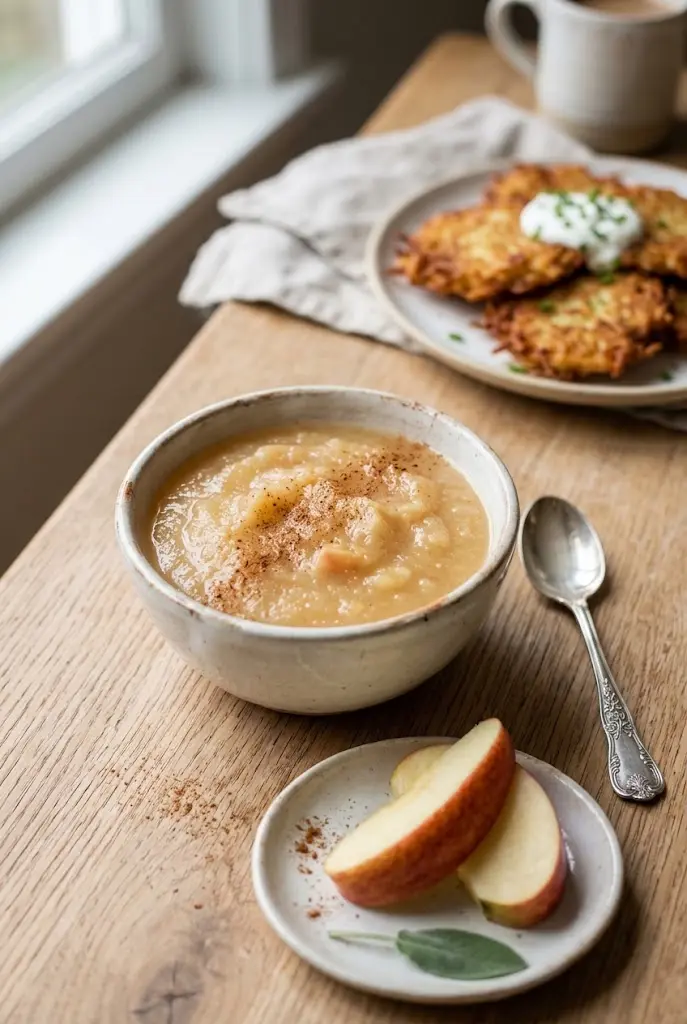
13. Cinnamon Apple Sauce
Applesauce is a familiar accompaniment for potato latkes, adding a cool, fruity contrast to their savory, crispy texture. Homemade applesauce is simple to prepare from fresh apples, a little water, and cinnamon. Its texture can be adjusted from chunky to smooth depending on personal preference.
This version works well on a Hanukkah table because it can be prepared in advance and served chilled or at room temperature. It is also a useful way to offer a naturally sweet option alongside richer dishes.
Ingredients
- 4 medium apples, peeled, cored, and chopped
- ½ cup water
- 1 tbsp lemon juice
- 1–2 tbsp granulated sugar, optional
- ½ tsp ground cinnamon
- Pinch of salt
How to Make
- Place the chopped apples, water, lemon juice, cinnamon, and salt in a medium saucepan.
- Bring to a gentle simmer over medium heat, then reduce the heat to low.
- Cover and cook for approximately 15–20 minutes, stirring occasionally, until the apples are soft.
- Taste and add sugar if needed, depending on the sweetness of the apples.
- Mash with a potato masher for a chunky texture or blend carefully for a smoother sauce.
- Let the applesauce cool, then serve at room temperature or chilled.
Tips
- A combination of sweet and tart apples gives the sauce a more balanced flavor.
- Add a little extra water if the pan becomes dry before the apples soften.
- Refrigerate leftovers promptly in a covered container and use within 3–4 days.
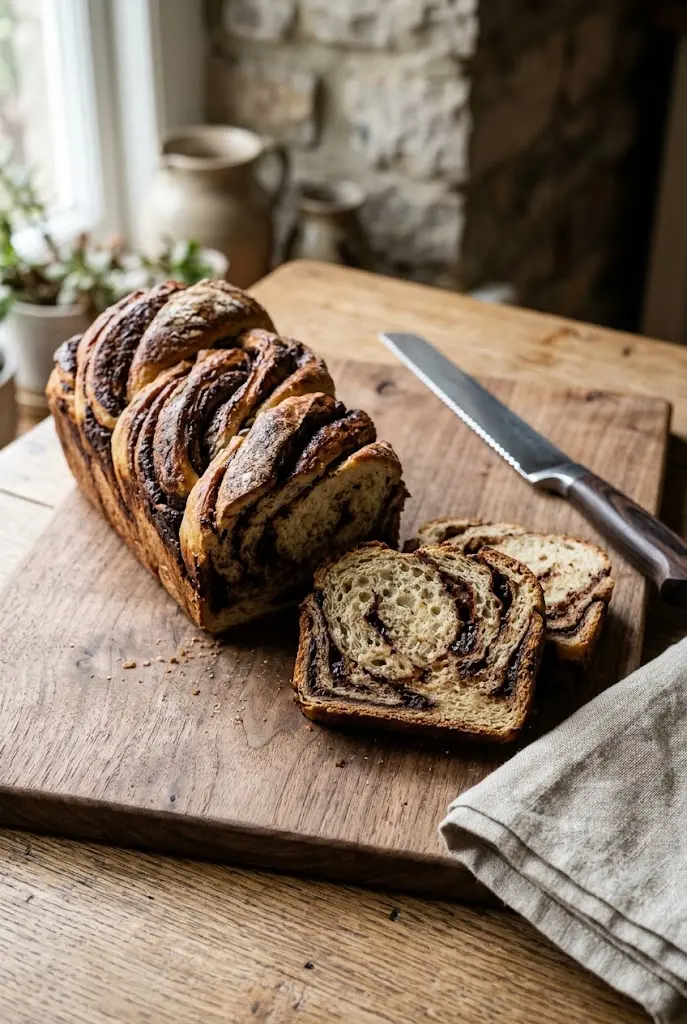
14. Chocolate Babka
Chocolate babka is a rich, braided yeast bread filled with chocolate and often finished with a light syrup. Its swirled interior creates an attractive pattern when sliced, making it a lovely addition to a holiday dessert table. Although it is enjoyed throughout the year, babka fits naturally into a Hanukkah gathering featuring traditional Jewish baked goods.
The key to a good babka is an enriched dough that rises properly and a filling that spreads easily without becoming too runny. A gentle syrup brushed over the warm loaf adds a subtle sheen and helps keep the crumb tender.
Ingredients
For the dough
- 3 cups all-purpose flour
- 2¼ tsp instant yeast
- ¼ cup granulated sugar
- ½ tsp salt
- 2 large eggs
- ½ cup warm milk
- 6 tbsp unsalted butter, softened
- 1 tsp vanilla extract
For the filling
- 5 oz semisweet chocolate, finely chopped
- 4 tbsp unsalted butter
- ¼ cup powdered sugar
- 2 tbsp unsweetened cocoa powder
For the syrup
- ¼ cup granulated sugar
- ¼ cup water
How to Make
- Mix the flour, yeast, sugar, and salt in a large bowl. Add the eggs, warm milk, and vanilla, then knead until a dough forms.
- Add the softened butter gradually and knead for 8–10 minutes until the dough becomes smooth and elastic.
- Cover and let rise for about 1–1½ hours, until doubled. Refrigerate for 30 minutes if the dough is too soft to roll.
- For the filling, melt the chocolate and butter together gently. Stir in the powdered sugar and cocoa, then cool until spreadable.
- Roll the dough into a rectangle approximately 12 × 16 inches. Spread the chocolate filling evenly, leaving a small border around the edges.
- Roll into a tight log from the long side. Slice lengthwise, twist the two strands together with the cut sides facing upward, and place in a greased 9 × 5-inch loaf pan.
- Cover and let rise for 30–45 minutes. Bake at 350°F (177°C) for 35–45 minutes, until cooked through and golden.
- Simmer the syrup ingredients for 2–3 minutes until the sugar dissolves. Brush the syrup over the warm loaf, then cool before slicing.
Tips
- Cool the chocolate filling until spreadable so it does not run out of the dough.
- Twist the dough gently to preserve the visible chocolate layers.
- If the top browns too quickly, cover loosely with foil for the remaining baking time.
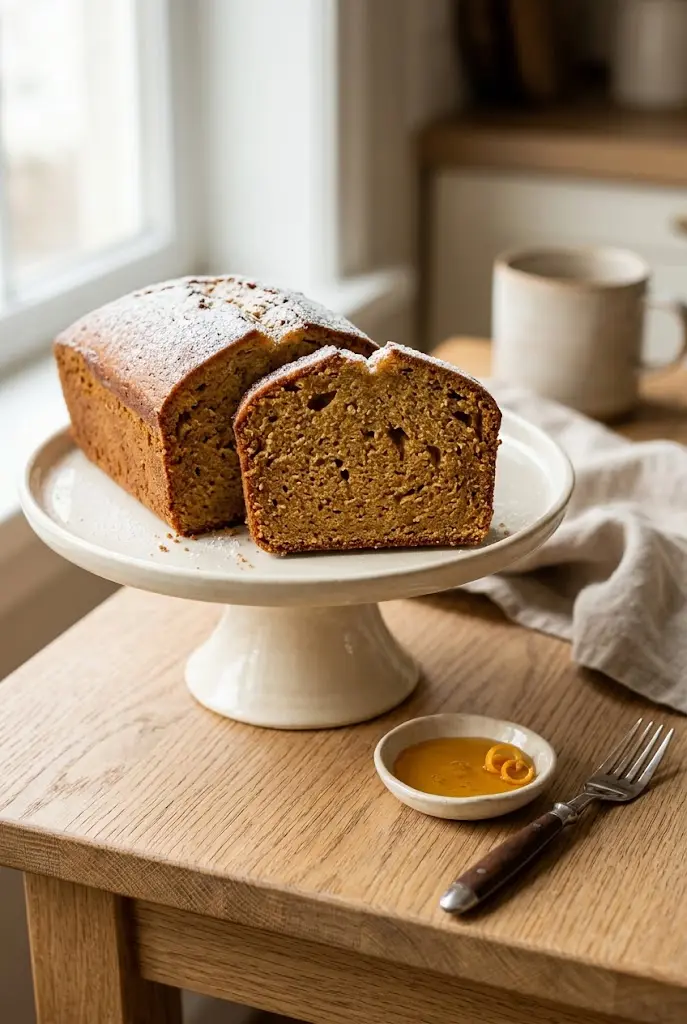
15. Classic Honey Cake
Honey cake is a traditional Jewish baked treat enjoyed during various celebrations and family gatherings. Its warm sweetness, tender crumb, and subtle spice make it a fitting finish to a Hanukkah meal. Recipes differ from household to household, with some versions using coffee or tea for moisture and others emphasizing citrus or cinnamon.
This version uses honey, cinnamon, and a little orange zest to create a fragrant loaf that slices neatly for serving. The flavor often becomes more developed after resting overnight, making it a convenient dessert to prepare ahead of a busy holiday gathering.
Ingredients
- 2½ cups all-purpose flour
- 1 tsp baking powder
- ½ tsp baking soda
- 1 tsp ground cinnamon
- ¼ tsp ground ginger
- ¼ tsp salt
- 3 large eggs
- ¾ cup honey
- ½ cup granulated sugar
- ½ cup neutral oil
- ¾ cup cooled brewed tea or water
- 1 tsp vanilla extract
- 1 tsp finely grated orange zest
How to Make
- Preheat the oven to 350°F (177°C). Grease and line a 9 × 5-inch loaf pan with parchment paper.
- Whisk the flour, baking powder, baking soda, cinnamon, ginger, and salt in a medium bowl.
- In a separate bowl, whisk the eggs, honey, sugar, oil, tea or water, vanilla, and orange zest until well combined.
- Add the dry ingredients to the wet mixture and stir just until no dry flour remains. Avoid overmixing.
- Pour the batter into the prepared pan and smooth the top.
- Bake for approximately 45–60 minutes, until a toothpick inserted into the center comes out clean or with a few moist crumbs.
- Cool in the pan for 15 minutes, then transfer to a wire rack to cool completely before slicing.
Tips
- Measure the honey carefully and lightly oil the measuring cup so it releases more easily.
- Avoid slicing the cake while hot, as the crumb needs time to set.
- Wrap the cooled loaf well to keep it moist; the flavor may become more rounded after resting overnight.